What Is an MCP Server? Why It Matters for Marketers
Just think about what it would be like if you could connect every piece of your customer data, campaign results, ad metrics, and CRM records from email, mobile, social, and ads, and then get your answers within seconds. No waiting, no manual merging of spreadsheets, or even struggling with confusing dashboards. That is the kind of power a modern “MCP server” offers.
It’s MCP servers that have been, quietly, the next-gen digital marketing infrastructure backbone lately. In a world where data moves faster than ever, marketers who continue to disregard this change are risking being left behind. This is not marketing fluff: it is the very groundwork of high-speed, data-driven marketing.
What is an MCP Server
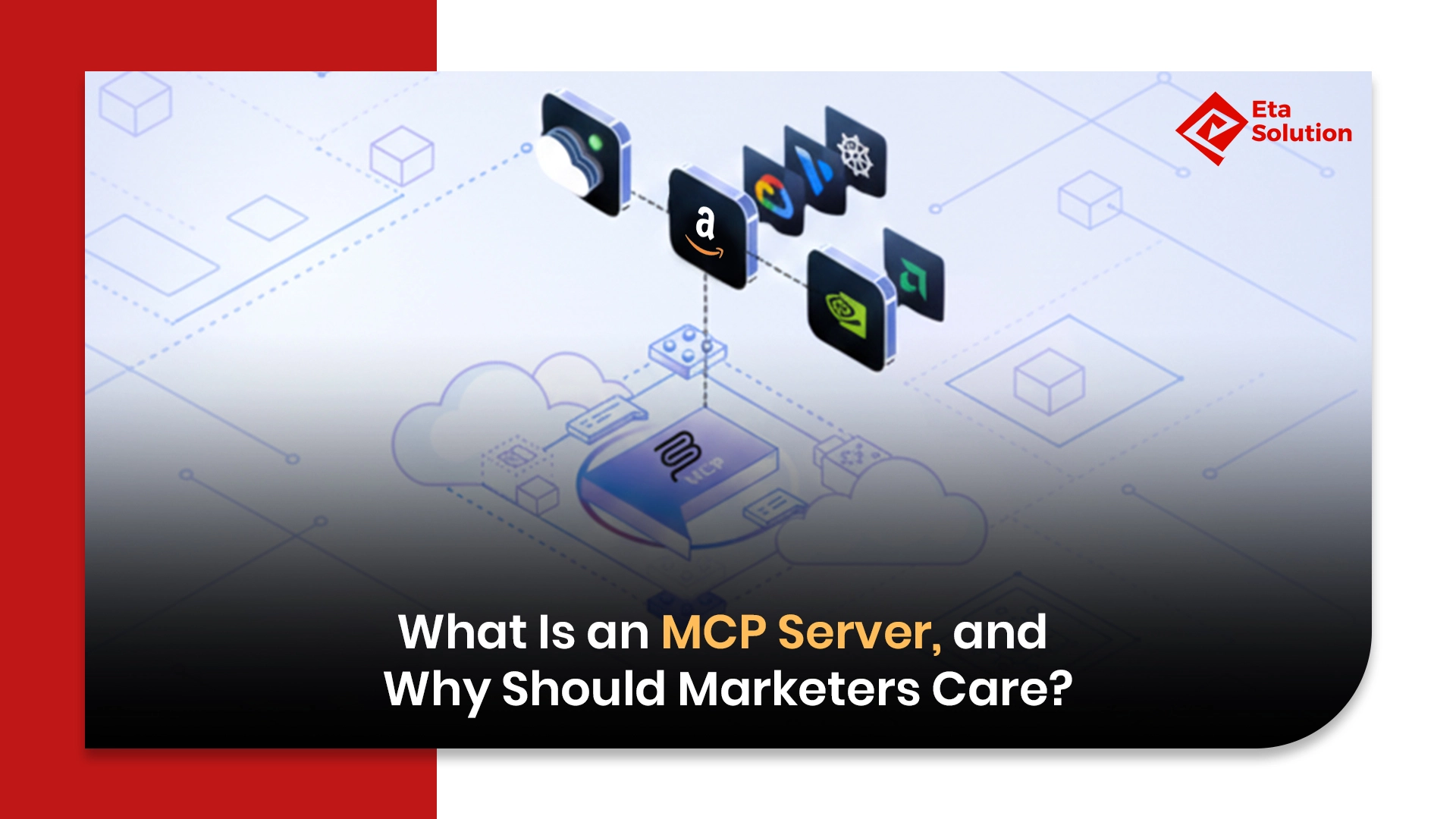
In most contexts today, “MCP” stands for Model Context Protocol. An MCP server implements that standard. It acts as a bridge between large-language-model (LLM) tools and your enterprise systems, CRM databases, marketing cloud platform server, commerce platforms, spreadsheets, whatever.
Instead of building bespoke integrations to pull data from, say, your marketing automation platform or CRM, the MCP server offers a universal, consistent “language.” Once set up, any compliant AI or data tool can plug in and access the data it needs no custom coding for each tool.
In layman’s terms, an MCP server is a unified, controlled middle layer that provides context to your AI/analytics/marketing tools.
As a result, MCP server benefits are becoming a must-have for firms that desire real-time marketing analytics, AI-driven personalization, customer data platform integration, and consolidated data infrastructures without the hassle of endless custom integration work.
Why Should Marketers, Not Just IT Folks, Care?
1. Real-time analytics & lightning-fast insights
Most MCP servers, which have a design similar to Massively Parallel Processing (MPP), are capable of quickly processing large amounts of data. In other words, marketing teams get the results of their analysis in almost no time from large, complex datasets originating from ad platforms, CRM, customer behavior logs, and purchase history. This is where real-time marketing analytics becomes a practical reality, not a buzzword.
Imagine you are executing a multi-channel campaign. The moment you see the analytics report of the MCP server + tool, you become aware of the worst-performing channel and, therefore, can redirect the budget right away.
2. Seamless integration across platforms
On the whole, a modern marketing stack is composed of numerous software tools, i.e., marketing automation tools, CRM, ad platforms, and data warehouses. In the absence of a unifying layer, data silos, ugly spreadsheets, and customer data blind spots are the end results you get.
Having an MCP server means all these sources use the same “protocol” for communication. Irrespective of the medium, this provides a comprehensive picture of the customer journey and touchpoints. This unified view is the basis of real data-driven marketing strategies: there is no need to make assumptions, nor is there a problem of data inconsistency.
3. Empowering AI-powered marketing solutions with current data
The use of AI in marketing is not a recent thing; however, supplying AI with clean and up-to-date data from various systems has always been a big challenge. The MCP standard remedies the problem.
By allowing AI agents easy, yet secure and controlled access to live data, marketers get the ability to innovate AI-powered marketing solutions: on-the-fly personalization, churn prediction, automated content suggestions, customer support bots, and cross-channel orchestration powered by AI marketing technology.
4. Efficiency in marketing operations and campaign optimization tools
Marketers are allowed to automate the processes instead of manually exporting data, reconciling, and uploading to analytics tools. A reduction in human errors, latency, and waste of resources is the direct consequence of that.
Campaign optimization is no longer a seasonal job that is performed weekly or monthly, but continuous. Marketers get to know what is effective and what is not, followed by making small changes, running tests, and scaling. Efficiency gets better. Performance gets better. ROI gets better. Such is the kind of competitive advantage businesses desire when they leverage campaign optimization tools and improve marketing operations efficiency.
Who is Using MCP-enabled Marketing Now
The foremost one is Salesforce Marketing Cloud:
Their novel “MCP server” project, which is presently in beta, is intended to allow AI tools and agents to have direct and secure access to SFMC data through standardized MCP interfaces across their multi-channel marketing platform.
There are already use cases for the implementation of this technology:
AI-powered customer service, smart journey personalization across channels, instant campaign adjustments, and even marketing-driven AI assistants that non-technical marketers can work with.
Outside SFMC:
Enterprises utilizing hybrid methods, such as cloud marketing automation + data warehouses + external ad platforms, are contemplating MCP servers to consolidate their entire marketing data architecture in one place, often as part of modern cloud marketing solutions.
Lesser-known Truths & Trends Insiders Rarely Shout About
Not all “MCP” references refer to Model Context Protocol. Some older or misinformed sources mix up “Microsoft Cloud Platform Server” or generic “cloud-based marketing servers.” But in marketing and AI data contexts, MCP almost always means Model Context Protocol. Be careful.
Despite hype around “AI marketing,” many companies still struggle because their data is fragmented. An MCP server doesn’t magically solve bad data hygiene or compliance issues, but it can stop those problems from getting worse. It forces structure.
Adoption of MCP is still nascent. That means early adopters get a first-mover advantage: better customer insights, faster personalization, smarter automation, while others are still juggling spreadsheets instead of using marketing software for agencies.
Real-time marketing analytics is no longer a “luxury feature.” With cloud infrastructure, scalable processing power, and AI integration, it’s becoming a baseline expectation, especially in retail, e-commerce, SaaS, and any data-intensive B2C business.
If You Run Marketing, What this Mean for You Now
Look for agencies or partners, for instance, a top digital marketing agency in India that understands and supports MCP-enabled infrastructure. These agencies will have a serious advantage when building robust, scalable marketing stacks.
Before starting any new marketing automation or cloud marketing solution, audit where your customer/campaign/analytic data lives. If it’s scattered, an MCP-based architecture can unify it.
Plan for continuous optimization, not “set-and-forget.” Once the infrastructure is in place, you can iterate on campaigns, personalization, and segmentation almost in real time.
The Main Benefits at a Glance
| Benefit | Why It Matters |
|---|---|
| Real-time marketing analytics | Instant decisions – no waiting for weekly reports |
| Unified data across CRM, ads, and automation | Single customer view, no misaligned data |
| AI-powered marketing workflows | Smarter personalization, AI assistants, better scalability |
| Operational efficiency & campaign optimization tools | Less manual work, fewer errors, faster execution |
| Future-proof digital marketing infrastructure | Scales with your data; avoids silo problems |
Why You Should Talk to an SEO Company About This
You aren’t up to date if you believe you can build campaigns, automations, and data-based strategies in 2025 using Excel spreadsheets to track manual exports. A top digital marketing agency in India can do the following:
Evaluate existing technology:
- Understand and document how data moves between the CRM system, marketing automation, and advertising technology
- Propose a phased integration of the MCP server, AI automation, and additional automated systems
- Build a successfully running and scalable marketing campaign that can be adjusted in real-time as changes occur.
The above systems save time, but will also change the competitiveness of your business. A Top digital marketing agency in India can further help brands integrate MCP architecture into broader channel strategies without breaking existing workflows.
Final Thoughts
If you’re running campaigns using traditional marketing approaches that require importing/exporting of your current usage reports on a regular basis or are still utilising some sort of hybrid approach using multiple, separate technology solutions, what will you have left available until you absolutely must move to more effective strategies without putting your overall campaign efficacy in jeopardy?
The reason this is important is that as more and more people discover how easy and efficient it is to work with technology solutions integrated into the infrastructure itself and as companies move toward becoming completely integrated into their overall operation; the more successful marketers will be those that can consolidate all of their company’s marketing data, have real-time insight into what affects their bottom-line performance, and leverage intelligent automation instead of just producing excellent content/ads.
Now is the time to place a heavy focus on building an effective infrastructure using the right marketing automation tools, modern cloud marketing solutions, and unified environments.
An MCP server (Model Context Protocol server) is a system that connects marketing tools, data sources, and AI agents so they can work together in real time. It helps unify data and streamline marketing workflows.
It enables real-time analytics, faster decision-making, and automated workflows by connecting CRMs, ad platforms, analytics tools, and AI models into one unified environment.
Because unified data removes inconsistencies between CRM, advertising platforms, and automation tools. This creates a single customer view, allowing for more accurate personalization and reporting.
Yes. MCP servers automate repetitive tasks—such as reporting, list building, content generation, routing, and campaign optimization—saving marketers time and reducing errors.
Absolutely. MCP servers scale with your data and tools, preventing data silos and ensuring your marketing stack remains flexible as new AI technologies and channels emerge.

What started as a passion for marketing years ago turned into a purposeful journey of helping businesses communicate in a way that truly connects. I’m Heta Dave, the Founder & CEO of Eta Marketing Solution! With a sharp focus on strategy and human-first marketing, I closely work with brands to help them stand out of the crowd and create something that lasts, not just in visibility, but in impact!

Omnichannel Marketing Strategies for eCommerce Brands

Facebook Ads for Local Businesses: A Complete Guide