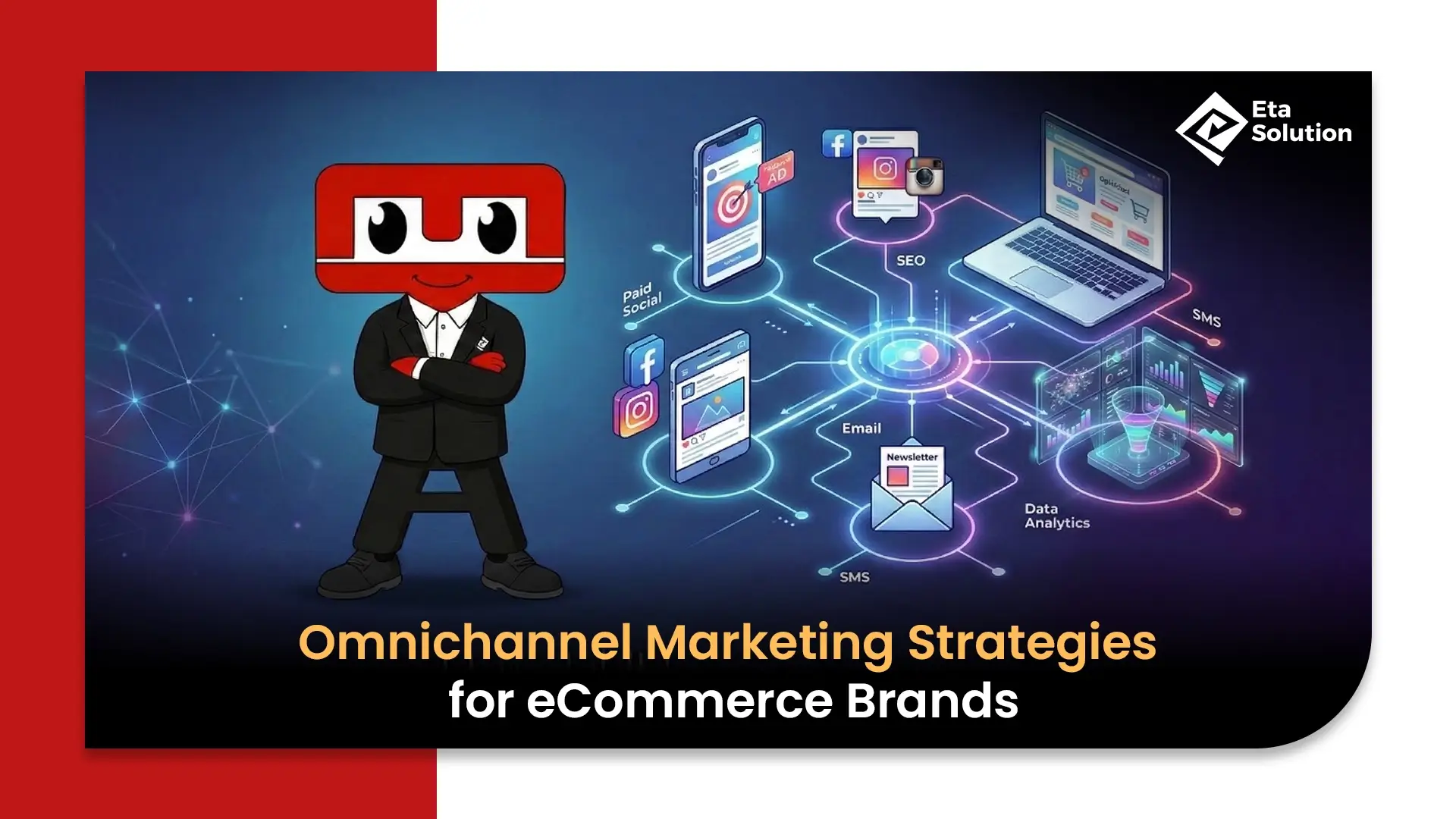
Omnichannel Marketing Strategies for eCommerce Success
You’d think that by now, brands would have caught on to the fact that customers don’t live in “channels.” Customers live in a state of constant movement. One day it’s Instagram, the next day it’s your website, the next day it might be your store, and before you know it… it’s your competitor because you managed to lose them somewhere in between.
The space in between is where revenue loss occurs. This is precisely when the concept of omnichannel marketing transcends being a buzzword and becomes a survival strategy.
What is Omnichannel Marketing in eCommerce?
Omnichannel eCommerce marketing isn’t about “being everywhere.” It’s about making every touch point into one cohesive experience.
A consumer interacts with your ad, clicks to your website, abandons cart, receives an email, walks into one of your stores, and still feels like they’re having one experience. Not five separate departments that are pretending to work together.
This is the power of a unified customer experience.
Here’s what most brands miss:
- It’s not a channel problem. It’s a data and experience problem
- It’s not about adding tools. It’s about connecting them
- It’s not about reach. It’s about continuity
Companies with strong omnichannel engagement retain 89% of customers, compared to 33% for weak strategies.
Omnichannel vs Multichannel Marketing: Key Differences
Most brands proudly claim they’re “multichannel.” Which usually means they’re present in multiple places… badly synchronized.
A multi channel retail strategy:
- Website, social media, email, marketplaces
- Each channel runs independently
- Data is fragmented
An omnichannel marketing strategy:
- Channels talk to each other
- Customer identity stays consistent
- Messaging adapts based on behavior
Example:
- Multichannel: Customer abandons cart → gets generic email
- Omnichannel: Customer abandons cart → sees dynamic retargeting + personalized email + app notification with the same product
The difference is simple now that Multichannel = presence. Omnichannel = intelligence.
Mapping the eCommerce Customer Journey Across Channels
If your team still draws neat funnels on whiteboards, that’s adorable. Customers don’t follow funnels anymore. They zigzag.
Real customer journey mapping eCommerce looks like this:
- Discovery on TikTok or Meta
- Validation via reviews or Google search
- Consideration on your website
- Drop-off
- Re-engagement via email or ads
- Purchase on mobile or in-store
The important part is not the steps. It’s the handoff between steps.
What experts focus on now:
- Identifying drop-off triggers, not just stages
- Tracking cross-device behavior
- Mapping intent signals, not just clicks
High-performing brands track micro-intents like hover time, scroll depth, and repeat visits to the same product. These signals drive smarter retargeting than basic “visited product page” logic.
Building a Unified Brand Experience Across Platforms
Customers don’t consciously notice consistency. They only notice when it’s broken.
A unified customer experience depends on three things:
- Visual consistency (design, tone)
- Behavioral consistency (offers, pricing, messaging)
- Data consistency (customer identity across platforms)
Example of failure:
- Instagram shows premium positioning
- Website shows discount chaos
- Email pushes unrelated products
That’s not a brand. That’s confusion with a logo.
Example of doing it right:
Brands like Nike ensure,
- Same campaign story across app, store, and ads
- Same product recommendations across devices
- Same loyalty benefits everywhere
This is where a solid integrated digital marketing strategy becomes non-negotiable.
Integrating Online and Offline Sales Channels
If your offline store and online store behave like strangers, you’re leaving money on the table.
Modern retail is hybrid. Customers expect:
- Buy online, pick up in store (BOPIS)
- Check store inventory online
- Return online purchases offline
These are not “features.” They’re expectations.
Some effective retail omnichannel examples:
- Target: Real-time inventory sync + curbside pickup
- Sephora: App connects in-store browsing with digital profile
- Zara: RFID tech syncing store and online stock
What’s happening behind the scenes:
- Unified inventory systems
- Centralized customer data platforms
- Real-time syncing (not batch updates from 2008)
Personalization Strategies in Omnichannel Marketing
Generic personalization is dead. “Hi John” is not personalization. It’s laziness dressed as effort.
An effective eCommerce personalization strategy uses:
- Behavioral data
- Purchase history
- Real-time intent signals
What actually works now:
- Dynamic product recommendations based on browsing patterns
- Predictive offers based on likelihood to purchase
- Personalized pricing or bundles
AI-driven personalization is moving from reactive – based on past actions to predictive – based on future intent.
Brands using advanced personalization report up to 20% higher conversion rates.
Using Ecommerce Digital Marketing Services for Omnichannel Success
This is where things get messy for most brands. Tools pile up. Teams don’t align. Data sits in silos.
Professional Ecommerce Digital Marketing Services solve this by:
- Integrating CRM, ad platforms, and analytics
- Building automation workflows across channels
- Creating centralized dashboards for decision-making
Key capabilities to look for:
- Cross-channel attribution modeling
- Advanced segmentation
- Lifecycle-based marketing automation eCommerce
The main focus of major agencies today involves optimizing customer lifetime value (CLV) rather than acquiring new customers. The practice of scaling advertisements without customer retention leads to wasteful spending because it increases financial losses at a faster rate.
Using Social Media, Email and Paid Ads Together
Most brands treat these as separate teams. This explains why messaging feels disjointed.
A successful cross channel marketing strategy creates connections between different marketing channels.
- Social media for discovery
- Paid ads for retargeting
- Email for conversion and retention
Example flow:
- User engages with Instagram reel
- Sees retargeting ad with same product
- Receives email with personalized offer
What makes it work:
- Shared audience data
- Consistent messaging
- Timing based on user behavior
Using email engagement data to refine ad targeting. If someone clicks but doesn’t buy, that’s a high-intent segment most brands ignore.
Data Tracking and Attribution Across Channels
Attribution is where most marketing reports go to die. Last-click attribution? Convenient. Also misleading.
Modern attribution models include:
- Multi-touch attribution
- Data-driven attribution
- Incrementality testing
What experts actually do:
- Combine platform data with CRM insights
- Use cohort analysis to track behavior over time
- Focus on assisted conversions, not just final clicks
iOS privacy updates have made tracking harder, but also forced brands to build first-party data ecosystems, which are far more valuable long term.
Measuring Omnichannel Performance and ROI
If you’re still measuring channels in isolation, your ROI numbers are lying to you.
Real omnichannel measurement focuses on:
- Customer lifetime value
- Retention rate
- Cross-channel conversion paths
- Engagement depth
Key metrics to track:
- Repeat purchase rate
- Time between interactions
- Revenue per user across channels
Brands using mature omnichannel strategies see:
- 9.5% annual revenue growth vs 3.4% for others
- 30% higher customer lifetime value
This is where Ecommerce Digital Marketing Services become critical again, because stitching this data manually is… not something any sane team wants to deal with.
Closing Take
Most brands don’t fail because they lack channels. They fail because their channels don’t talk to each other.
Customers have already moved ahead. They expect continuity, relevance, and recognition at every step. Not friction. Not repetition. Not confusion.
An effective omnichannel customer engagement approach isn’t about doing more. It’s about doing things in sync.
And here’s the uncomfortable part: If your experience breaks even once, customers don’t complain. They just leave.
The question isn’t whether omnichannel matters anymore. It’s how much revenue you’re quietly losing by pretending your channels are “good enough.”
Key components include unified customer data, consistent messaging, cross-channel integration, personalized communication, and real-time engagement across platforms.
Multichannel marketing uses multiple platforms independently, while omnichannel marketing connects all channels to deliver a seamless and unified customer experience.
Common channels include websites, mobile apps, email marketing, social media platforms, SMS, marketplaces, and customer support channels like chat and call centers.
By delivering personalized experiences and consistent messaging across channels, it builds trust, reduces friction in the buying journey, and improves conversion rates.
Popular tools include CRM systems, marketing automation platforms, customer data platforms (CDPs), email marketing tools, and analytics software.

What started as a passion for marketing years ago turned into a purposeful journey of helping businesses communicate in a way that truly connects. I’m Heta Dave, the Founder & CEO of Eta Marketing Solution! With a sharp focus on strategy and human-first marketing, I closely work with brands to help them stand out of the crowd and create something that lasts, not just in visibility, but in impact!
Omnichannel Marketing Strategies for eCommerce Brands
Facebook Ads for Local Businesses: A Complete Guide