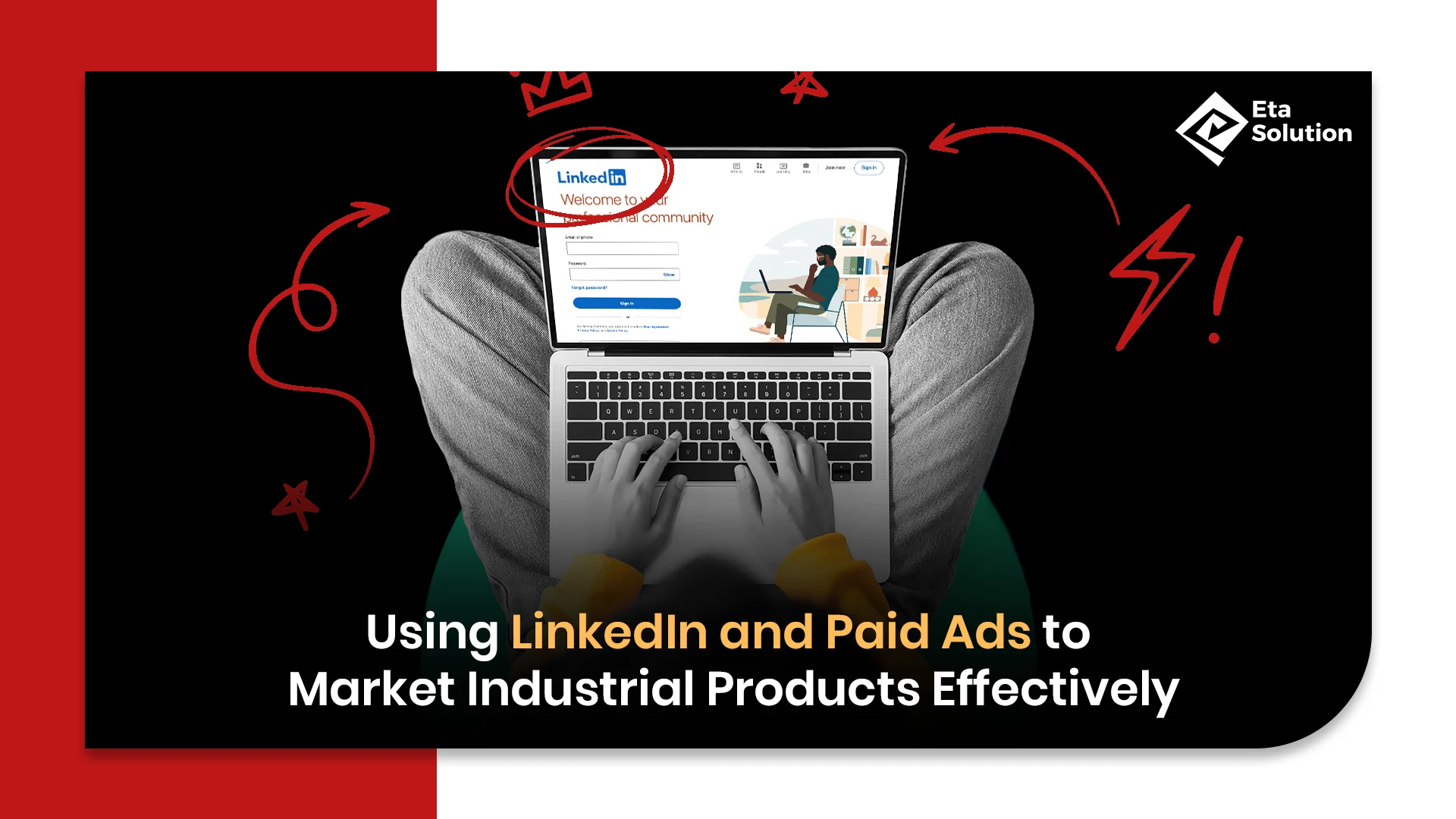
Introduction: Why LinkedIn and Paid Ads Matter for Industrial Marketing
Industrial buyers don’t browse Instagram for impulse purchases. They scroll LinkedIn between meetings, vendor calls, and procurement reviews. And when they do, they’re not looking for inspiration. They’re validating decisions worth six or seven figures.
Here’s the uncomfortable truth many industrial brands ignore: organic visibility alone is no longer enough. LinkedIn’s average B2B engagement rate dropped below 2 percent in the last year, while paid reach continues to rise. The brands still generating demand are the ones blending credibility-driven content with paid amplification that reaches decision-makers before competitors do.
LinkedIn and paid ads are not “top-of-funnel experiments” anymore. For industrial marketing, they are deal acceleration tools. Used well, they shorten sales cycles, warm procurement teams, and keep your brand in the room long after the first demo.
Understanding the Industrial Buyer Persona on LinkedIn
Industrial buyers behave differently from typical B2B audiences. They are rarely solo decision-makers. In the majority of cases, machines or equipment purchases typically are influenced by engineers, plant managers, heads of procurement, finance teams, and, occasionally, safety or compliance officers.
According to the latest data from LinkedIn, more than 70 percent of industrial buying committees have at least four stakeholders who are each engaging with content on their own before any internal discussions take place. This has an impact on how you market.
What matters to them:
- Proof of operational reliability
- Clear ROI justification, not vague benefits
- Industry-specific use cases
- Risk reduction more than innovation hype
This is why LinkedIn marketing for industrial products works best when content speaks to systems, processes, and outcomes instead of features. A plant head cares about uptime. A procurement officer cares about cost predictability. Your content has to respect both.
LinkedIn Company Page Setup for Industrial Products
A surprising number of industrial brands treat their LinkedIn page like a static brochure. That’s wasted real estate.
A strong linkedin company page setup does three things consistently:
- Positions the brand as operationally credible
- Signals industry focus immediately
- Supports paid campaign conversions
Pages with industry-specific banners and pinned case studies see up to 30 percent higher follower-to-lead conversion, according to internal LinkedIn partner benchmarks.
Key improvements experts quietly recommend:
- Replace generic “About Us” language with sector-specific outcomes
- Feature one technical case study prominently, not awards
- Align page messaging with ad copy to reduce bounce from sponsored traffic
This alignment becomes critical once ads start driving cold traffic.
LinkedIn Content Strategies for B2B Industrial Marketing
Content alone doesn’t convert. Content plus distribution does. Still, without strong content, paid spending leaks money.
Effective content marketing for LinkedIn in industrial sectors focuses on:
- Technical explainers simplified for decision-makers
- Plant-level insights instead of brand storytelling
- Operational comparisons backed by data
High-performing industrial posts often include:
- Short process breakdowns
- Before-and-after operational metrics
- Commentary on regulatory or compliance shifts
Brands running consistent industrial marketing campaigns on LinkedIn report higher inbound lead quality when content addresses real implementation challenges, not just solutions.
LinkedIn Sponsored Content and Lead Gen Forms
LinkedIn sponsored content works best when it feels like expert commentary, not advertising. Sponsored posts that mirror organic thought leadership see nearly 40 percent lower cost per click.
When combined with lead generation forms LinkedIn, friction drops dramatically. Pre-filled forms increase conversion rates by up to 20 percent, especially for industrial whitepapers, spec sheets, and webinars.
Advanced tactic industry insiders use:
- Run the same content in organic for two weeks
- Promote only the top-performing post
- Attach lead forms only after engagement proof
This approach improves lead intent and filters casual clicks.
Setting Up Paid Ads Campaigns for Industrial Products
Paid ads fail in industrial marketing when campaigns are structured like ecommerce funnels. Long buying cycles demand patience and sequencing.
Successful paid advertising for industrial products usually follows a three-stage structure:
- Awareness through problem-specific content
- Consideration via case studies or demos
- Conversion using gated assets or consultations
Industrial brands using structured b2b paid ads strategies report stronger mid-funnel engagement than those running single-offer campaigns.
Targeting the Right Audience with LinkedIn Ads
LinkedIn’s real power lies in its targeting depth. Job titles alone are not enough.
Effective targeting industrial buyers involves layering:
- Job function plus seniority
- Industry plus company size
- Skills or group memberships
Campaigns using layered targeting see up to 25 percent improvement in lead relevance, based on agency-level campaign audits.
This precision is what separates high-performing b2b linkedin ads from expensive experiments.
Budgeting and Bidding Strategies for Paid Industrial Ads
Industrial clicks are expensive. That’s reality. The average cost per click in manufacturing-related sectors often exceeds $6.
Smart LinkedIn ad budget strategies focus less on daily spend and more on audience saturation. Smaller, well-defined audiences convert better than broad targeting with higher budgets.
Expert-level bidding insight:
- Manual bidding often outperforms automated bidding for niche industrial segments
- Lower bids with longer run times reduce volatility
- Frequency caps prevent brand fatigue among small buyer pools
Tracking and Measuring ROI of LinkedIn and Paid Ads Campaigns
Industrial ROI is rarely immediate. Measuring success requires patience and attribution discipline.
Advanced ROI tracking LinkedIn ads go beyond form fills:
- CRM integration with deal stages
- Tracking content influence on closed deals
- Measuring assisted conversions
Companies tracking influenced revenue rather than last-click attribution see clearer value from industrial product promotion on LinkedIn.
Best Practices and Successful Industrial Marketing Campaigns
One lesser-known example comes from a mid-sized automation manufacturer that shifted from product ads to plant-level performance storytelling. Instead of promoting specs, they promoted downtime reduction data from real deployments.
The result:
- 2.3x increase in qualified leads
- Shorter sales conversations
- Higher trust from procurement teams
This pattern repeats across successful industrial marketing campaigns. Consumers react to clear operations more than witty slogans.
Having an experienced Digital marketing service provider on your side can be really helpful in setting up the campaigns properly, right from the beginning. Quite a few industrial brands only see this after wasting a few months of their advertising budgets. The best teams use LinkedIn as a brand-building tool for the future rather than a quick lead generator. An expert digital marketing agency knows the interaction between content, targeting, and attribution in industrial ecosystems.
Closing Take
LinkedIn and paid ads are no longer optional tools for industrial brands. They are strategic levers that influence how buyers perceive risk, value, and credibility long before a sales call happens.
The brands winning today are not louder. They’re clearer. They respect buyer intelligence, invest in precision, and build trust through evidence-backed messaging. Whether managed in-house or through a reliable digital marketing service provider, the real question is no longer you should invest in LinkedIn and paid ads.
It’s whether your competitors are already shaping the conversation while you’re still deciding how to start.
LinkedIn allows industrial brands to target decision-makers such as engineers, procurement managers, and plant heads using job titles, industries, company size, and seniority.
Manufacturers, OEMs, automation companies, industrial equipment suppliers, and B2B service providers benefit most from LinkedIn advertising.
LinkedIn is ideal for targeting specific decision-makers, while Google Ads capture high-intent searches. Using both delivers better results.
Yes. With precise targeting and optimized messaging, even small industrial businesses can compete effectively and generate high-quality leads.
Common mistakes include broad targeting, overly technical messaging, weak CTAs, and not aligning ads with the buyer’s journey.

What started as a passion for marketing years ago turned into a purposeful journey of helping businesses communicate in a way that truly connects. I’m Heta Dave, the Founder & CEO of Eta Marketing Solution! With a sharp focus on strategy and human-first marketing, I closely work with brands to help them stand out of the crowd and create something that lasts, not just in visibility, but in impact!
Omnichannel Marketing Strategies for eCommerce Brands
Facebook Ads for Local Businesses: A Complete Guide