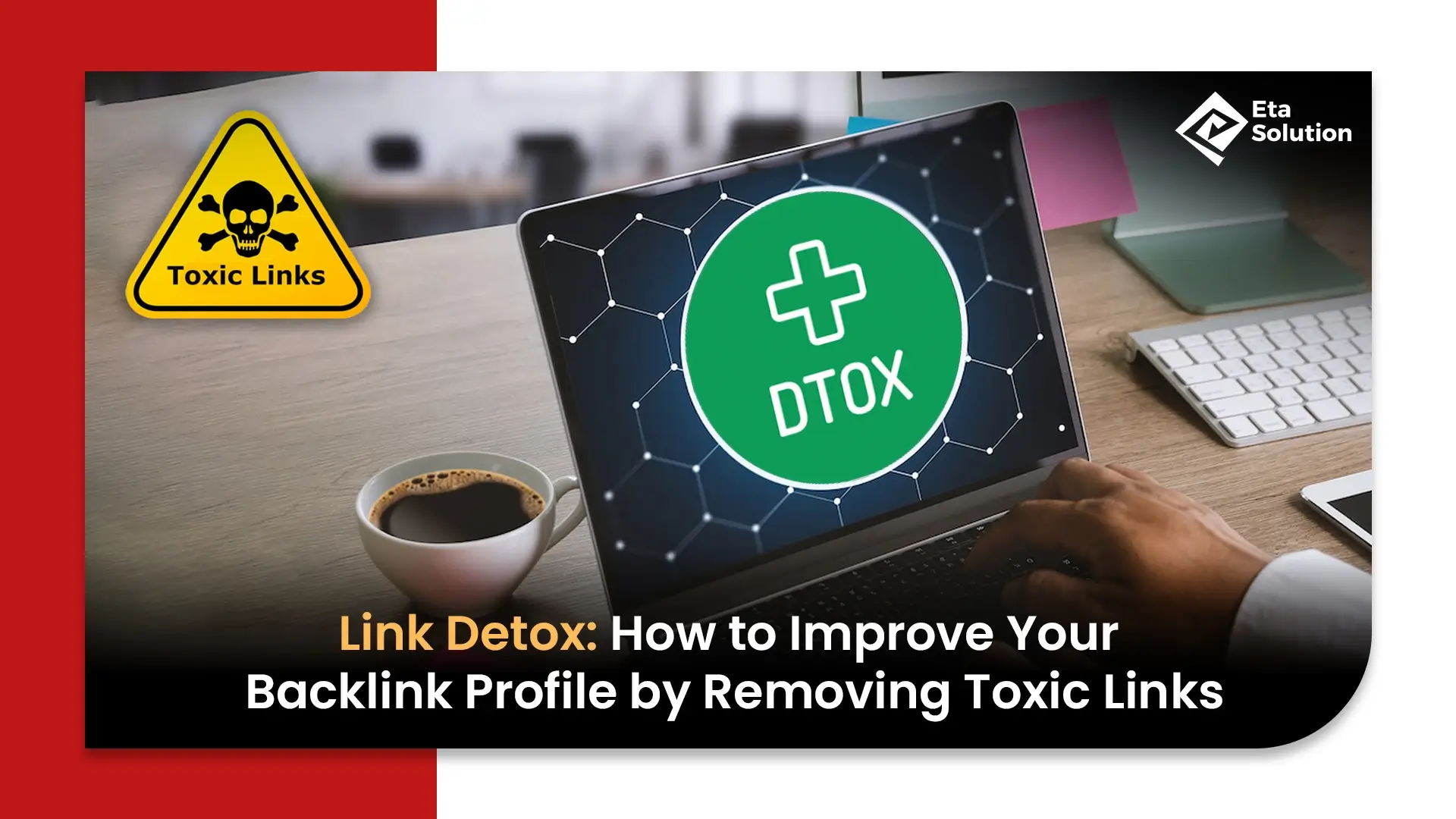
Link Detox: Remove Toxic Backlinks & Improve SEO Rankings
The marketing team at your organization must have celebrated its achievement of acquiring multiple backlinks.
Three months after the achievement, the website experienced a decline in rankings and a halt in its traffic while the team failed to determine the cause of these issues. The moment becomes distressing for businesses when they discover that backlinks contain detrimental links. Some links that appear harmless actually damage your SEO performance.
Backlink profile quality determines modern search algorithms more than backlink quantity. Google ranking systems assess trust signals together with link relevance and manipulation patterns to determine website ranks. A few toxic links originating from spam networks can damage multiple years of successful SEO efforts.
The process requires link detoxification as a mandatory step. Marketers who possess intelligence establish routine backlink profile audits to eliminate hazardous links that might damage their ability to maintain rankings over time.
The following paragraph will explain the process followed by organizations that want to implement this method.
What Is Link Detox and Why It Matters in Modern SEO
A link detox will identify all harmful backlinks that need removal because they threaten your website’s search engine credibility.
Toxic backlinks usually come from:
- Link farms or automated blog networks
- Irrelevant or spam-heavy directories
- Sites that have received malware or adult content warnings
- Over-optimized anchor text used to manipulate rankings
Search engines give rewards to websites that acquire links through natural methods. Toxic backlinks send the opposite signal. They suggest manipulation or poor link quality.
Google will apply algorithmic penalties and manual actions when suspicious links reach an excessive volume.
Backlinks remain one of the strongest Ranking factors in SEO. The process of link cleanup has become essential for advanced SEO operations because harmful backlinks create ranking drops and indexing problems.
Digital marketing brands that allocate substantial resources require link quality protection, which equals their authority-building efforts.
The Hidden Signals That Reveal Toxic Backlinks
Experienced SEO professionals rarely rely on just one metric. Toxic links usually reveal themselves through patterns.
Common signals include:
- Very low domain authority websites with hundreds of outgoing links
- Foreign language sites unrelated to your niche
- Exact-match anchor text repeated excessively
- Links from penalized domains or link networks
The website experiences abrupt spikes of backlinks, which come from unlinked websites.
The evaluation of extensive backlink collections becomes simpler through the backlink classification system of Ahrefs, SEMrush, and Google Search Console, which divides links into three categories: toxic links, potentially toxic links, and safe links.
The website experiences unusual link acquisition patterns, which create an additional warning signal. Backlinks that appear on a website within one night period indicate that the website undergoes either automated spam attacks or negative search engine optimization efforts.
The marketing professionals track these metrics every month to protect their business from lasting harm.
The Backlink Audit Process: How Experts Identify Risk
The first step in any SEO link cleanup is running a complete backlink audit. Without a full dataset, removing toxic links becomes guesswork.
A typical backlink audit process involves several stages.
1. Collect backlink data
Use multiple sources to gather links:
- Google Search Console
- Ahrefs
- SEMrush
- Moz or other SEO tools
Combining data from several tools ensures you don’t miss hidden links.
2. Evaluate link quality
SEO professionals analyze:
- Domain authority
- Site relevance
- Spam signals
- Anchor text patterns
3. Categorize backlinks
Links are generally classified into:
- Safe links
- Suspicious links
- Toxic links requiring action
4. Document risky domains
Before removing anything, experts document every questionable link. This prevents accidental deletion of valuable backlinks.
Large-scale link audit platforms now combine over 25 backlink data sources and more than 150 SEO metrics to detect toxic links more accurately.
This level of analysis helps businesses improve backlink profile quality without harming legitimate authority signals.
Toxic Link Removal Guide: Practical Methods That Work
Once toxic links are identified, the next step is removal. The safest strategy involves a mix of outreach and technical actions.
Here’s a practical bad backlink removal strategy used by experienced SEO teams.
1. Contact the site owner
Start by requesting link removal from the website hosting the backlink.
This approach:
- Shows Google genuine effort to fix the issue
- Helps maintain transparency during reconsideration requests
2. Remove internal spam signals
Sometimes, harmful links come from old campaigns or directories created by previous SEO agencies.
Cleaning these sources often eliminates dozens of toxic backlinks at once.
3. Monitor link changes
After removal requests, track whether the links disappear or remain active. This process may take weeks, but it often resolves a significant percentage of bad links.
The goal is simple: remove toxic backlinks whenever possible before resorting to disavowal.
How to Disavow Backlinks Using Google’s Tool
The process of outreach will proceed to its next stage when outreach attempts prove unsuccessful. The Google Disavow Tool enables website owners to request Google exclusion of particular backlinks during ranking assessment.
The tool requires careful usage because it belongs to advanced tools, according to a critical warning. The wrong application of this tool will result in negative effects on SEO performance.
A simplified Google disavow tool guide looks like this:
- Export backlink data from Google Search Console
- Identify domains or URLs that should be ignored
- Create a text file listing those domains
- Upload the file to the Disavow Tool in Search Console
Example format:
domain:spamwebsite.com
domain:badlinknetwork.net
After submission, Google gradually processes the list as it re-crawls the web.
However, industry experts emphasize one important point: disavowing links should be a last resort, used mainly when a site faces manual penalties or large-scale spam attacks.
Why Backlink Profile Optimization Is Now a Continuous Process
SEO used to focus heavily on link building. Today, the smarter strategy combines link acquisition with backlink profile optimization.
Several trends explain why.
1. Google’s algorithms have become stricter
Systems like SpamBrain detect unnatural link patterns faster than before.
2. Negative SEO attacks are more common
Competitors sometimes attempt to flood websites with spam backlinks to disrupt rankings.
3. Automated link-building tools create messy link profiles
Businesses accumulate toxic links because they continue using outdated SEO techniques.
Modern SEO teams conduct monthly backlink health assessments because of this requirement.
Regular link detox audits allow brands to:
- Maintain domain authority
- Avoid penalties
- Protect long-term search visibility
Enterprise businesses that implement SEO strategies need to conduct this monitoring as their standard procedure.
Why Businesses Often Rely on the SEO Company for Link Cleanup
Link detoxing sounds straightforward on paper. In reality, it requires technical analysis and strategic judgment.
A professional Best SEO Company in Ahmedabad typically manages:
- Advanced backlink audits
- Spam pattern detection
- Outreach campaigns for link removal
- Disavow file creation
- Ongoing backlink monitoring
Numerous organizations are integrating their detox efforts into campaigns that help build their authority within the overall link ecosystem.
By doing this, they’re able to resolve issues and increase their capability to drive organic traffic.
Link Detox Combined With Long-Term SEO Strategy
One of the great misconceptions of link detoxification is that the process itself will create more visibility for a website. The reality is that link detoxification will only remove barriers to ranking, while growing your natural search rankings through the following:
- Earning quality editorial links back to your site
- Building an authoritative brand that produces relevant content
- Regularly monitoring the backlinks to your site
- Keeping a clean link profile
Companies that work with the Best SEO Company in Ahmedabad generally use link detoxification in conjunction with broader strategies for optimizing their total backlink profile, which provides for both link detoxification and growth.
This approach creates a consistent and trustworthy domain that search engines favor.
Final Thoughts
The backlinks to your website establish your search engine rankings. The toxic backlinks to your website will destroy your website’s rankings without any warning signs. The uncomfortable truth is that many businesses keep chasing more links without ever checking the ones they already have.
Smart marketers do the opposite. They monitor, audit, and clean their backlink profiles regularly. They approach SEO as a system of trust signals that operates differently from a race to achieve higher traffic numbers.
The current search engine algorithms determine authority based on both your website’s links and your choice to reject particular connections.
Toxic backlinks can harm your website by signaling to search engines that your site is associated with spammy or manipulative practices. This can lead to ranking drops, reduced organic traffic, or even manual penalties from Google. In severe cases, your website may be deindexed or pushed far down in search results, making it difficult for users to find you.
You can identify toxic backlinks using SEO tools like Google Search Console, Ahrefs, SEMrush, or Moz. Look for links from low-quality domains, irrelevant niches, spammy websites, link farms, or sites with high spam scores. Unnatural anchor text patterns and links from penalized or deindexed sites are also strong indicators of toxic backlinks.
The best approach is to first contact the website owners and request link removal. If that doesn’t work, you can use Google’s Disavow Tool to tell search engines to ignore those harmful links. It’s important to be cautious and only disavow truly toxic links, as removing good backlinks can negatively impact your SEO.
You should audit your backlink profile regularly, typically every 3 to 6 months. However, if you notice sudden drops in rankings or traffic, it’s a good idea to perform a link detox immediately. Regular monitoring helps you maintain a clean and healthy backlink profile.
Yes, removing toxic backlinks can improve your SEO by eliminating negative signals that may be holding your site back. While results may not be immediate, over time, a cleaner backlink profile can lead to improved trust, better rankings, and increased organic traffic.

What started as a passion for marketing years ago turned into a purposeful journey of helping businesses communicate in a way that truly connects. I’m Heta Dave, the Founder & CEO of Eta Marketing Solution! With a sharp focus on strategy and human-first marketing, I closely work with brands to help them stand out of the crowd and create something that lasts, not just in visibility, but in impact!