Inbound Marketing Strategy to Grow Your Brand
Growth doesn’t stall because businesses stop marketing. It stalls because they keep pushing messages no one asked for.
The current successful brands maintain less volume than their competitors. The company maintains a presence at three distinct customer stages, which include present-time searching, product comparison, and decision-making.
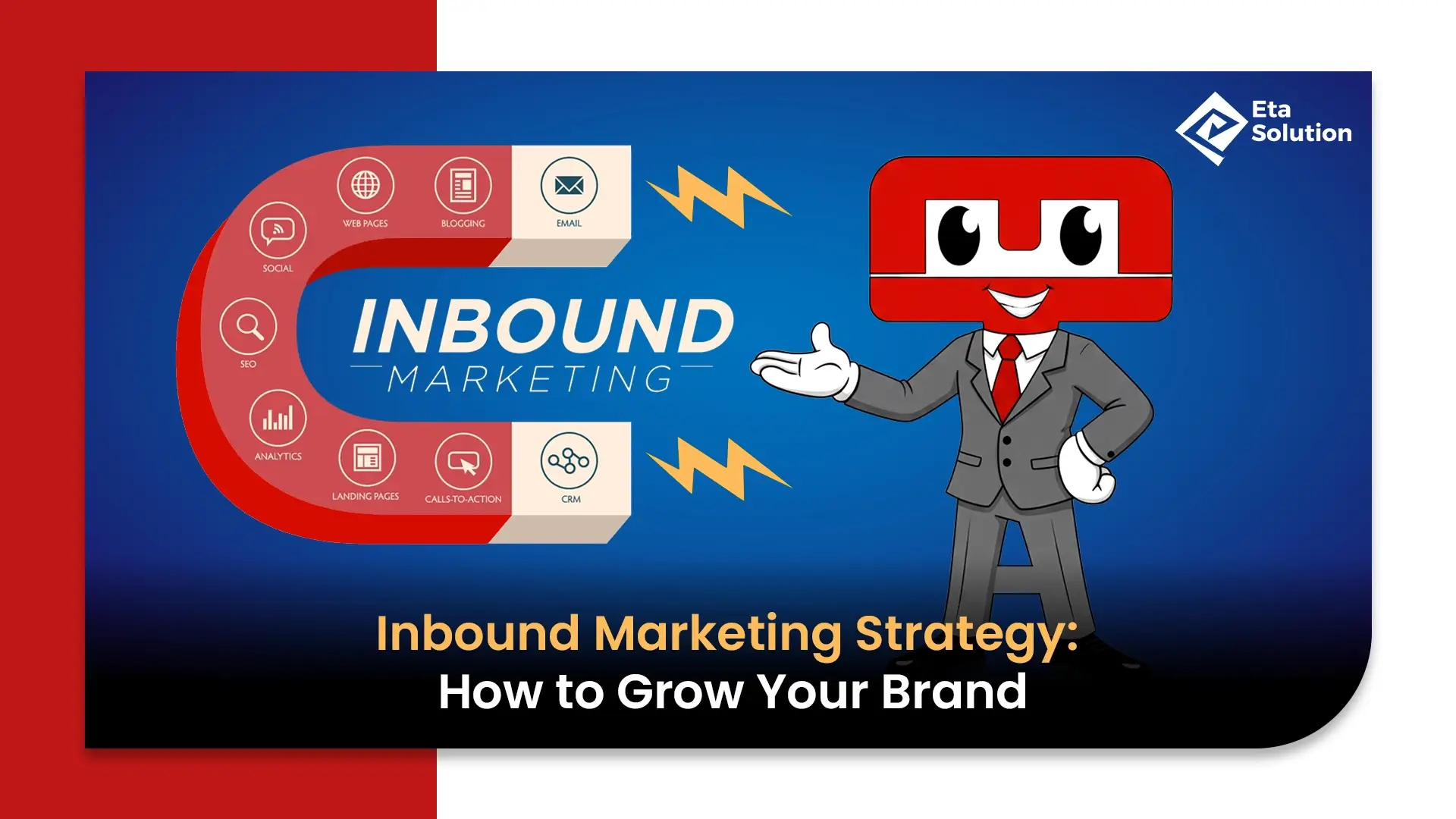
Inbound marketing requires businesses to develop marketing strategies that match their customers’ needs without creating interruptions. So let’s dive deeper into what inbound marketing means.
Inbound Marketing Definition
Customers find your business through inbound marketing, which uses relevant content and customer interactions to create organic discovery routes. Inbound marketing is all about:
- Help solve problems before making a sale
- Build credibility before making a conversion
- Establish long-term demand for products versus only short periods of time where customers have attention on you.
The purpose of an inbound marketing strategy is to gain your audience’s attention, not purchase it from them. An inbound-driven organization creates 54% more quality leads than a traditional outbound-driven organization. However, the advantage of using inbound marketing is its long-term cost-effectiveness compared to other forms of advertising. Once an advertisement has been paid for, the “promotional” aspect of the advertisement stops immediately. Whereas, when using Inbound Marketing, you build on this to create additional value over time.
Inbound vs Outbound Marketing
The difference isn’t just tactics. It’s philosophy.
Outbound marketing pushes messages outward:
- Cold emails
- Display ads
- Interruptive calls
Inbound vs outbound marketing comes down to control. Outbound forces attention. Inbound earns it.
Here’s where experienced marketers pay attention:
- Outbound works faster but decays quickly
- Inbound takes longer but builds authority assets
- Outbound depends on budget
- Inbound depends on consistency
The smartest brands don’t eliminate outbound. They reduce dependence on it.
The Inbound Marketing Funnel: Attract, Convert, Close, Delight
Every effective inbound funnel strategy follows four stages.
- Attraction: Earn Traffic By Creating Relevant Content, which is achieved through Search Engine Optimisation (SEO) through Blogs and Social Content.
- Conversion: Turn Visitors Into Leads By Providing Them With Forms, Downloads & Gated Content.
- Closing: Convert a Lead to a Customer Through Nurturing, Retargeting & Selling Aligned to Leads’ Needs.
- Delight: Create Repeat Customers Who Are Brand Advocates.
The buyer’s journey does not follow a linear pattern anymore; people skip all stages of the funnel; they binge on content; they need to validate across multiple platforms. Therefore, the traditional rigid funnel model is no longer effective, whereas the use of an adaptable LADDER approach to inbound marketing is proven to be an effective way to guide your customers toward making a purchase.
How to Build an Inbound Marketing Strategy
A real inbound marketing plan is not “let’s post blogs and hope.” It requires alignment across multiple layers:
- Audience clarity
- Content mapping to intent
- SEO foundation
- Conversion paths
- Measurement systems
Here’s a simplified structure:
- Define who you want
- Identify their search behavior
- Create content for each stage of decision-making
- Build clear conversion points
- Track what actually moves revenue
Most strategies fail because they overinvest in content creation and underinvest in distribution and optimization. Content alone is not a brand growth strategy. It’s just raw material.
Buyer Persona Development
If your persona looks like “Marketing Manager, 35-45, interested in growth,” you’ve already lost. Effective personas are built on:
- Buying triggers
- Objections
- Decision timelines
- Content consumption habits
For example, in B2B inbound marketing:
- A CEO looks for ROI clarity
- A marketing head looks for execution efficiency
- A procurement team looks for cost justification
Same product. Different messaging. The more specific the persona, the more efficient your inbound lead generation becomes.
Content Marketing in Inbound Strategy
Content is not about volume. It’s about alignment. A strong content driven marketing strategy includes:
- Top-of-funnel: Educational blogs, industry insights
- Mid-funnel: Case studies, comparison guides
- Bottom-of-funnel: Product pages, demos, testimonials
What experts are quietly doing now:
- Updating old content instead of endlessly creating new pieces
- Building topic clusters instead of isolated blogs
- Optimizing for search intent, not just keywords
Updating existing content can increase traffic by up to 106%, often outperforming new content creation.
SEO and Organic Traffic Growth
SEO is the engine behind a digital inbound strategy. But modern SEO is not just keywords. It’s:
- Search intent alignment
- Content depth
- Internal linking
- Topical authority
Google now favors expertise clusters over standalone articles. That’s why brands investing in inbound marketing for small business growth are focusing on:
- Building authority in narrow niches
- Creating interconnected content ecosystems
The shortcut mindset doesn’t survive in SEO anymore.
Lead Generation and Conversion Optimization
Traffic without conversion is just expensive validation. Inbound lead generation depends on:
- Clear value exchange
- Minimal friction
- Strong CTAs aligned with intent
Conversion optimization often comes down to small details:
- Button copy
- Page speed
- Trust signals
A/B testing isn’t optional at this stage. It’s survival.
Marketing Automation and Email Nurturing
Once leads enter your system, automation takes over. But most automation fails because it feels… automated.
Effective email nurturing:
- Responds to behavior, not just time
- Personalizes based on stage
- Delivers actual value, not just promotions
Advanced teams are now using:
- Behavioral triggers
- Content sequencing
- Lead scoring models
This is where B2B inbound marketing becomes powerful. You’re not just generating leads. You’re qualifying them before sales even step in.
Measuring Inbound Marketing Performance
Vanity metrics are comforting. They’re also useless. Real inbound performance is measured through:
- Lead price
- Conversion percentage of leads into customers
- Customer cost of acquiring
- Lifetime Value (LTV) of a customer
While brands may measure traffic, they often don’t know how much their content contributed to the business results. Without measuring the impact of your content on business outcomes, your inbound marketing framework is incomplete.
Why Work with a Marketing Agency In Ahmedabad
Execution is where strategies collapse. A reliable marketing agency in Ahmedabad can bridge the gap between planning and performance by:
- Building structured inbound marketing plans
- Aligning SEO, content, and automation
- Ensuring consistent optimization
The advantage is not just cost efficiency. It’s access to teams that understand both local execution and global market expectations.
Many growing brands now prefer working with a Marketing agency in Ahmedabad because they combine scalability with strong technical depth.
And frankly, managing all this in-house without expertise usually leads to half-built systems and wasted budgets.
Final Take
Inbound marketing is not a tactic. It’s an operating system for how modern brands grow. But here’s the uncomfortable part:
Most businesses claim to do inbound. Very few actually commit to it.
They publish content without a strategy.
Track metrics without meaning.
Automate without understanding behavior.
And then they wonder why growth feels inconsistent. A real inbound marketing strategy demands patience, precision, and continuous refinement. The question isn’t whether inbound works. It’s whether you’re willing to do it properly, or just keep producing content that looks busy but goes nowhere.
A strong inbound marketing strategy includes content marketing, SEO, social media marketing, email marketing, and lead nurturing. It also involves creating buyer personas, mapping the customer journey, and using analytics to track performance. Together, these elements help attract, engage, and convert your target audience effectively.
Inbound marketing is a long-term strategy, and results typically start becoming noticeable within 3 to 6 months. However, significant growth in traffic, leads, and conversions may take 6 to 12 months depending on your industry, competition, and consistency. The key is to stay consistent and continuously optimize your efforts.
Blog posts, how-to guides, videos, infographics, case studies, and ebooks are highly effective for inbound marketing. Content that educates, solves problems, or answers common questions tends to perform best. It’s important to align content with different stages of the buyer’s journey—awareness, consideration, and decision.
Inbound marketing focuses on attracting customers organically through helpful content and experiences, while outbound marketing relies on interruptive methods like cold calls, ads, and email blasts. Inbound is more cost-effective and builds long-term trust, whereas outbound often delivers quicker but less sustainable results.
Yes, inbound marketing is especially beneficial for small businesses because it offers a cost-effective way to compete with larger brands. By targeting niche audiences and creating valuable content, small businesses can build authority, generate quality leads, and grow sustainably without large advertising budgets.

What started as a passion for marketing years ago turned into a purposeful journey of helping businesses communicate in a way that truly connects. I’m Heta Dave, the Founder & CEO of Eta Marketing Solution! With a sharp focus on strategy and human-first marketing, I closely work with brands to help them stand out of the crowd and create something that lasts, not just in visibility, but in impact!
Inbound Marketing Strategy: How to Grow Your Brand