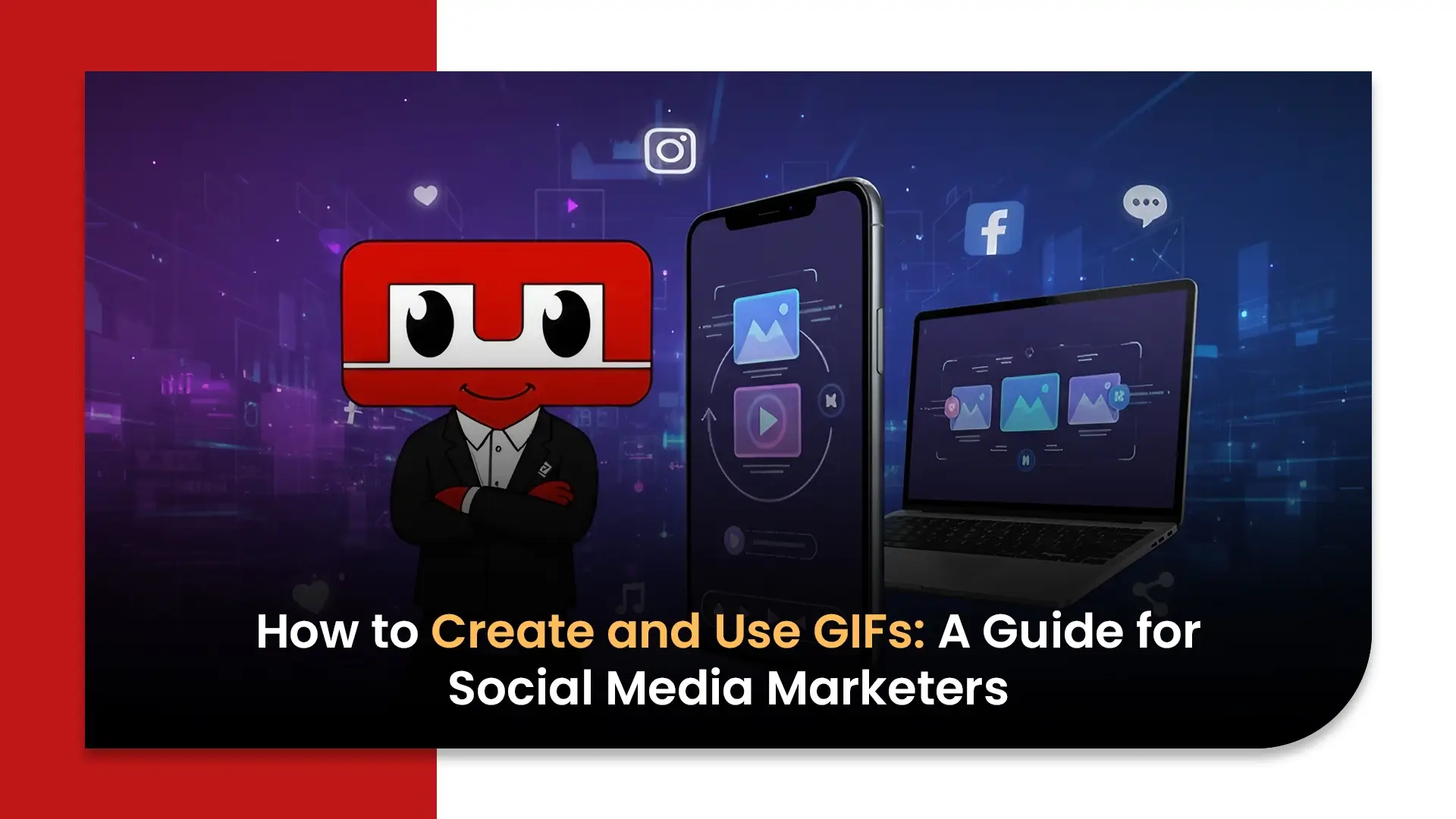
GIFs for Social Media: Quick Marketer Guide
Today, people tend to pay attention to things for about 3-5 seconds and scroll through dozens of posts before even thinking about seeing one of them. This means stationary images may struggle with being seen or holding people’s attention, while long videos require a substantial amount of time to view, but many users are not going to provide that much time. So, it is not surprising that GIFs have become one of the most efficient ways to create and distribute content in today’s digital marketing landscape.
GIFs combine movement + animation, clarity, and speed to communicate a concept instantaneously by providing an animation loop until it “sticks” in the mind of viewers. As a result, GIFs are a great way for business marketing managers to increase their audience engagement, brand recognition, and convert customers at higher levels on any platform.
We’re going to look at how organizations strategically use GIFs as well as what resources you’ll need to create your own GIFs, and then how to create high-performing GIFs step by step, which ultimately leads to measurable improvement for all companies.
Why GIF Marketing Matters in Modern Visual Content Marketing
GIF marketing is growing due to how consumers interact with online media. More specifically, people view images more quickly than text, and have a greater lucid experience when they see something animated compared to when they view something that isn’t moving. GIFs are the perfect mix between images and video because they combine some characteristics from each medium.
A recent analysis across various social networks demonstrated that motion-based posts will typically receive 20-60% higher levels of interaction than still-image posts. On social media such as X and LinkedIn, posts containing GIFs have the tendency to receive more shares and comments than non-GIF posts. When email campaigns are used in conjunction with GIF usage, there tends to be a clear improvement in the click-through rates.
One of the key reasons that GIFs are creating such a strong marketing impact is because GIFs are extremely versatile. For example, companies are using GIFs for:
- Product demonstrations
- Showcasing features
- Sharing reaction-based content
- Creating awareness of events
- Onboarding customers
With many B2B brands, inclusion of GIFs can also help companies communicate valuable information about their products more efficiently than would have been possible with longer explainer videos. The increasing reliance on Visual content marketing by all brands is evidence of an evolution in consumer preference for visual information, appreciation of their time, and understanding of clarity immediately.
What are GIFs, and Why Marketers Rely on Them
GIFs, or Graphics Interchange Format files, are a format for creating moving, repeating images that play automatically and don’t have any audio. Unlike traditional video, they don’t require any user interaction to play and load quickly. They also contain movement and emotion, which allows them to tell a story with images.
For this reason, marketers prefer GIFs because:
- They provide a quick means of visual storytelling
- They can be shared on social media as well as through email and your own website
- They provide a greater retention of your message to the viewer
- They give a personality to how your brand communicates
The flexibility of GIFs allows for their use across all formats of social media content, making them an excellent form of micro-content that can be used in many modern marketing tactics.
How to Create GIFs: Step-By-Step Workflow for Marketers
Creating GIFs efficiently is vital for your GIFs, helping you to meet your marketing objectives as opposed to simply enhancing your post.
Step 1: Define the GIF’s Purpose Before Creating It
Each GIF should accomplish something specific. Some examples of the purposes for GIFs are as follows:
- Awareness
- Feature Demonstration
- Engagement
- Conversion
Each GIF must have one distinct message. Multiple messages on one GIF weaken the effectiveness of the message communicated.
Step 2: Choose Your Source Format
Typically, marketers use the following types of source files to create GIFs:
- Video clips
- Image sequences
- Screen captures
- Animations
Creating GIFs from video is generally the most effective solution from a “cost-per-asset” perspective because you often will create multiple GIF assets from a single 30-second video of a product.
Step 3: Edit & Optimize the GIF
The quality/experience of the GIF is very important to effective GIF content marketing. Here are some best practices to apply while creating your GIFs:
- Duration between 2-6 seconds
- Perfectly looping GIF
- Minimal amount of text for clarity
- Branding should be subtle
- Compress the file size while maintaining an acceptable quality
A smooth loop keeps viewers watching the GIF longer and sharing it with others. A smaller file size will load faster on all devices when viewed on the web.
Step 4: Export For the Platform You’re Using GIFs On
Different platforms have different requirements when it comes to how GIFs perform, so you need to be mindful of the differences between them.
- Instagram Feed: MP4 – from GIF
- Emails: Small GIF File Size – lightweight
- Web: Optimized File Size – to maintain load time
Planning the export ahead of time will ensure that your GIF functions correctly throughout all the platforms you use GIFs on.
GIF Tools for Marketers
Selecting the right tools helps make your GIFs easier to produce and consistent in quality.
1) Beginner GIF Tools – Quick Creation:
Tools like Canva & Giphy make creating GIFs simple and fast with pre-made templates and very basic animation capabilities, as they have very simple exporting options. These GIFs are great for social posts or other quick-to-implement marketing campaigns; however, their customization component is extremely limited.
2) Intermediate GIF Tools – Optimisation:
Tools like EZGIF & mobile GIF editing apps allow you to make your GIFs smaller in size, adjust the speed of the GIFs, and optimize your loops. These types of tools will also help to optimize the performance of your GIFs so you can continue using them across multiple media.
3) Advanced GIF Tools – Branded Animation:
Adobe Photoshop or After Effects gives marketers complete creative control over their GIFs, enabling them or their marketing team to create a branded animated system using reusable templates and high-quality product demos.
Many brands have also created a searchable library of their branded GIFs on Giphy, therefore allowing them to be used organically in more places, such as Instagram Stories.
How to Create GIFs for Instagram, LinkedIn, and Email
Using GIFs specific to your platform produces better results.
When Creating GIFs for Instagram:
- Use either a vertical format or a square format
- Create bold and eye-catching graphics.
- If you’re looking to share GIFs in your feed, you’ll need to change the format of your GIFs to MP4 format before you share.
- Create stickers for your brand on the GIPHY platform so your stickers can appear in other people’s stories.
When Designing LinkedIn GIFs:
- Use GIFs for product demonstrations or data visualizations as a way to reach your audience.
- Keep all captions and comments as professional as possible.
- Use GIFs in thought leadership & announcement posts.
When Creating GIFs for Email Marketing:
- Show what products do by demonstrating the features in under a second.
- Highlight key CTAs by using GIFs as part of your overall approach to driving action from your audience.
- Use lightweight GIFs instead of large videos to avoid the burden of large attachments to emails.
Using GIFs for social media marketing across platforms will create a stronger message about your brand and improve brand recognition.
A well-defined social media GIF strategy converts simple animations into quantifiable marketing assets.
Social Media GIF Strategy for Brand Growth
Brands commonly classify GIFs into four types:
- Awareness GIFs that introduce new products or services
- Engagement GIFs that respond to current trends or conversations
- Education GIFs that provide information about features or processes
- Conversion GIFs that promote discounts or testimonials
As an example, Netflix’s GIFs for brand engagement with its audience in real-time through reaction-based GIFs, or Slack’s demonstration of product features within seconds using a product GIF, are designed as part of their overall content ecosystem rather than treated as an independent form of media.
This defined structure will provide greater engagement through the use of GIFs for brands and ensure consistent results across marketing campaigns.
Real Performance Impact and Emerging Trends
As technology and user behaviours continue to drive change, the use of animated GIFs marketing is no exception.
There are several trends surrounding animated GIF marketing, including:
- Searchable branded GIFs becoming discoverable content assets
- Increasingly using animated GIFs in email marketing for increased click-through rate (CTR)
- Using artificial intelligence to speed up the process of creating animated GIFs from longer videos
- Live events and product launches are being supplemented by animated GIFs as a way to provide real-time updates.
- In addition to providing real-time updates during live events, the use of animated GIFs is to repurpose micro-content created during webinars and product demonstrations.
These shifting trends demonstrate that the utilization of animated GIFs for marketing has rapidly moved out of the experimental stage and has become a key component of the larger marketing strategy.
How GIF Marketing Trends are Impacting Global Brands
Social media marketing in Ahmedabad is leveraging GIFs as performance-based visual assets when working with clients as they target the U.S. market; therefore, there has been tremendous growth in demand for fast, attention-grabbing content.
Because of this growth in demand, many social media marketing agencies:
- Have created a branded GIF library for their clients
- Develop looping product demonstration animated GIFs for use in advertising and social media
- Leverage animated testimonials to build credibility
- Incorporate animated GIFs into email marketing and landing page strategies
While creativity remains a significant focus, the ultimate objective of social media marketing companies is to provide clients with measurable engagement. Therefore, social media marketing in Ahmedabad is aligning with global marketing trends to create quality GIF content that will create engagement across all international markets.
With increased competition in the marketplace, social media marketing agencies are providing brands with a more strategic and consistent way to use animated GIFs as part of their overall social media marketing strategy.
Measuring Success of GIF Campaigns
To achieve an adequate return on marketing spending, you will need metrics that relate specifically to the performance of GIFs along with traditional marketing metrics.
Suitable metrics for keeping track of your GIFs are:
- Engagement versus static post metrics
- Frequency of sharing and saving GIFs
- Click-through rates of GIF-based advertisements
- Engagement rates based on email use of GIFs
- Increased conversions and sales
Through A/B testing of GIFs against static imagery, substantial differences in performance can be observed. Most brands that view GIFs as measurable assets for their marketing efforts realize better returns on their effort with GIFs over time.
Closing Take
GIFs have progressed from entertainment on the internet to primary marketing assets. They tell stories in mere seconds, impart information without taking time away from consumers, and provide motion to a visual that would otherwise provide no source of movement.
Brands that implement measured systems of creating and utilizing GIFs will be at the forefront of attracting, engaging, and retaining consumers. Brands that continue to utilize only static visuals as the basis of their content will become irrelevant in the rapid-fire movement of social media.
As visual messaging speeds up and becomes more dynamic, brands investing in motion today will, without a doubt, shape how audiences will interact with brands in future years. Social Media Marketing in Ahmedabad is rapidly moving in this direction, and results globally are on the rise for digital communications.
GIFs improve engagement by adding motion and personality to posts. Movement naturally attracts the eye, which can increase stop-scroll behavior. Brands use GIFs to highlight product features, reactions, quick tutorials, and announcements. Compared to static images, GIFs often generate higher likes, shares, and comments because they feel more interactive and entertaining.
There are many easy tools available depending on your skill level. Beginners can use tools like GIPHY Create, Canva, or EZGIF to convert images and videos into GIFs quickly. More advanced users may prefer Photoshop or After Effects for higher control over animation quality. Mobile apps also allow fast GIF creation directly from phone videos for real-time marketing content.
Most high-performing GIFs are between 2 to 6 seconds long. Shorter GIFs load faster, loop smoothly, and keep the message focused. Long GIFs can increase file size and reduce loading speed, which may hurt user experience. The goal is to communicate one clear idea or action per GIF rather than telling a full story.
To prevent performance issues, marketers should compress GIF files and limit dimensions. Use optimization tools to reduce file size, lower frame rates if needed, and avoid unnecessary frames. In some cases, converting GIF-style animations into short MP4 videos can provide similar visual impact with much smaller file sizes for websites and landing pages.
GIFs can be used in email marketing (where supported), blog content, landing pages, online ads, chat support replies, and presentations. They are especially useful for product demos, feature highlights, and step-by-step visual guides. However, always test compatibility in email clients and web platforms before publishing.

What started as a passion for marketing years ago turned into a purposeful journey of helping businesses communicate in a way that truly connects. I’m Heta Dave, the Founder & CEO of Eta Marketing Solution! With a sharp focus on strategy and human-first marketing, I closely work with brands to help them stand out of the crowd and create something that lasts, not just in visibility, but in impact!
Facebook Ads for Local Businesses: A Complete Guide
How to Fix Plugin Conflicts in WordPress