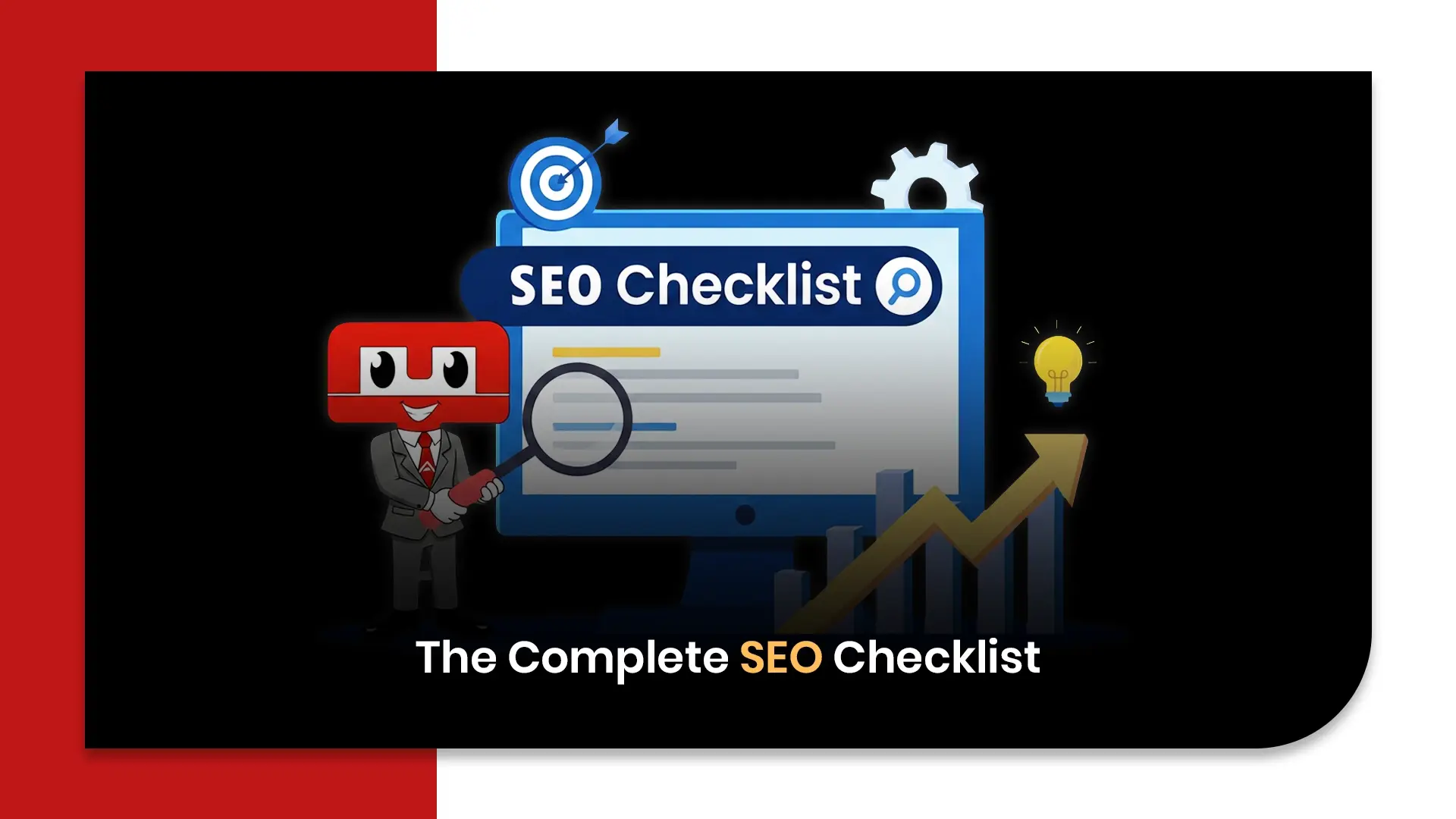
The Complete SEO Checklist: Step-by-Step Guide for 2026
SEO didn’t quietly evolve. It snapped.
One month, your pages rank comfortably. The next, traffic slips without warning. No penalties. No alerts. Just a slow bleed that dashboards politely label as “fluctuation.” Behind that word is something harsher: Google has moved again, and your site didn’t move with it.
This is not another surface-level guide. This is a working SEO checklist shaped by how search actually behaves today. Google’s implementation of more than 40% of Ranking Signals based upon user behaviour vs Tech-Based and Google’s use of Behaviour Signals. SEO will once again require an SEO Checklist.
A practical, end-to-end SEO checklist you can use for audits, new website launches, and ongoing optimization. This checklist is structured to match how search engines crawl, index, rank, and evaluate trust.
1. SEO Foundations (Before You Start)
☐ Define clear SEO goals (traffic, leads, sales, brand visibility)
☐ Identify target country & audience (e.g., India-focused SEO)
☐ Set up Google Search Console
☐ Set up Google Analytics 4 (GA4)
☐ Connect GA4 with Google Search Console
☐ Install Google Tag Manager (optional but recommended)
☐ Create a logical website structure (Homepage → Category → Subpage)
2. Keyword Research Checklist
☐ Identify primary keyword for each page
☐ Map one main keyword per page (avoid keyword cannibalization)
☐ Research secondary & LSI keywords
☐ Analyze search intent (informational / commercial / transactional)
☐ Check keyword difficulty and search volume
☐ Analyze top-ranking competitors for target keywords
☐ Finalize keywords based on relevance + intent + competition
3. On-Page SEO Checklist
Page-Level Optimization
☐ SEO-friendly URL (short, readable, keyword-based)
☐ Meta title within 50–60 characters
☐ Meta description within 150–160 characters
☐ Primary keyword included in title & description
☐ Only one H1 tag per page
☐ H1 includes main keyword naturally
☐ Proper H2–H6 heading hierarchy
☐ Keyword placement in first 100 words
Content Optimization
☐ High-quality, original, and helpful content
☐ Content satisfies search intent
☐ Use synonyms & related terms (no keyword stuffing)
☐ Internal links to relevant pages
☐ External links to authoritative sources
☐ Images optimized with descriptive ALT text
☐ Use bullet points, tables, and short paragraphs
4. Technical SEO Checklist
Crawlability & Indexing
☐ XML sitemap created and submitted
☐ Robots.txt configured correctly
☐ Important pages are indexable
☐ No accidental noindex tags
☐ Canonical tags implemented correctly
Website Performance
☐ Page load time under 3 seconds
☐ Core Web Vitals optimized (LCP, INP, CLS)
☐ Mobile-friendly design (responsive)
☐ HTTPS enabled (SSL certificate)
Technical Best Practices
☐ Fix broken links (404 errors)
☐ Proper 301 redirects for removed pages
☐ No duplicate content issues
☐ Structured internal linking
☐ Clean URL parameters
5. Content SEO Checklist
☐ Content calendar created
☐ Blog posts target long-tail keywords
☐ Each blog solves a real user problem
☐ Use FAQ sections for featured snippets
☐ Content length matches top-ranking pages
☐ Regularly update old content
☐ Add schema markup where applicable
6. Schema & Structured Data Checklist
☐ Organization schema
☐ Website schema
☐ Breadcrumb schema
☐ Article / BlogPosting schema
☐ FAQ schema (when applicable)
☐ Product schema (for eCommerce)
☐ LocalBusiness schema (for local SEO)
7. Local SEO Checklist (If Applicable)
☐ Google Business Profile created & verified
☐ NAP (Name, Address, Phone) consistency
☐ Correct business category selected
☐ Add business photos & logo
☐ Collect and respond to reviews
☐ Local keywords used on website
☐ Location pages optimized
8. Off-Page SEO & Link Building Checklist
☐ Analyze backlink profile
☐ Acquire high-quality, relevant backlinks
☐ Guest posting on niche websites
☐ List business in relevant directories
☐ Avoid spammy or paid links
☐ Monitor toxic backlinks
☐ Build brand mentions (unlinked citations)
9. UX & Conversion Optimization
☐ Clear CTA on every important page
☐ Easy navigation and site structure
☐ Mobile UX optimized
☐ Forms working properly
☐ Trust signals added (reviews, testimonials, certifications)
10. SEO Tracking & Monitoring Checklist
☐ Track keyword rankings
☐ Monitor organic traffic trends
☐ Analyze top-performing pages
☐ Check index coverage reports
☐ Monitor Core Web Vitals
☐ Track conversions from organic traffic
☐ Monthly SEO performance reporting
11. Ongoing SEO Maintenance
☐ Publish fresh content regularly
☐ Update existing content quarterly
☐ Re-optimize underperforming pages
☐ Monitor algorithm updates
☐ Competitor SEO analysis
☐ Improve E-E-A-T (Experience, Expertise, Authority, Trust)
Why SEO Needs a Checklist Again
In 2022, Google started to implement more Behaviour-Based Signals than Technical Signals for its algorithms. In 2024, Google confirmed that more than 40% of Ranking Signals are based on user behaviour and only 60% on the technical aspects of your site.
SEO today fails for three reasons:
- Teams chase tactics without a system
- Audits stop at tools, not outcomes
- Strategy isn’t updated after algorithm shifts
A proper website SEO checklist creates alignment between visibility, relevance, and trust. Without it, optimization becomes guesswork dressed up as expertise.
The SEO Strategy Checklist That Sets Direction
Before fixing pages or links, direction matters. A strong SEO strategy checklist begins with intent mapping, not keywords alone.
Industry teams now prioritize:
- Search intent clusters instead of single keywords
- SERP feature targeting like People Also Ask and AI snapshots
- Brand-led content instead of pure informational posts
Google’s Helpful Content updates reward clarity of purpose. Pages that try to serve everyone now serve no one. Strategy starts with deciding what your site will not rank for.
This step is where experienced agencies separate themselves. Many brands working with the best digital marketing agency in Ahmedabad report stronger performance simply because strategy comes before execution.
SEO Audit Checklist That Goes Beyond Tools
Most audits stop where tools stop. That’s the problem.
A real SEO audit checklist examines:
- Indexation gaps caused by JavaScript rendering
- Crawl budget waste from parameter-heavy URLs
- Keyword cannibalization hidden across blog archives
According to a 2024 Ahrefs study, 67% of sites ranking on page two suffer from internal competition, not backlinks or content quality.
Audits today also review:
- AI-generated snippets stealing clicks
- Brand mentions without links
- Declining CTR on high-ranking pages
If your audit ends with “fix meta titles,” it’s incomplete
On-Page SEO Checklist That Matches How Users Read
Users don’t read pages. They scan for answers.
An effective on-page SEO checklist now focuses on:
- First 100 words answering intent directly
- Contextual internal links that guide depth
- Visual breaks that reduce bounce, not decorate pages
Google’s NavBoost system increasingly favors pages where users scroll, click, and stay. Short sentences matter. Clear subheadings matter more.
Strong on-page optimization also means:
- Updating old content every 6-9 months
- Removing filler paragraphs written only for word count
- Rewriting intros that delay value
These are SEO optimization steps most brands skip because they’re uncomfortable deleting content they paid for.
Technical SEO Checklist for Stability and Scale
You can’t out-content a broken foundation.
A modern technical SEO checklist prioritizes:
- Core Web Vitals tied to real user data, not lab scores
- Clean URL hierarchies that scale with content growth
- Structured data aligned with actual page intent
Google now uses INP as a ranking signal. Many sites pass audits yet fail this quietly.
Technical SEO also includes:
- Log file analysis to understand crawl behavior
- Server response monitoring during traffic spikes
- Canonical consistency across paginated content
This is where most SEO improvement stalls because fixes require collaboration, not plugins.
Off-Page SEO Checklist That Builds Trust, Not Noise
Links alone don’t move rankings anymore. Context does.
A smart off-page SEO checklist evaluates:
- Link relevance within topical ecosystems
- Brand mentions across authoritative publications
- Traffic quality, not domain metrics
Google’s SpamBrain system now devalues links that don’t support topical authority. One strong industry citation often outweighs dozens of generic placements.
Brands that follow real SEO best practices invest in:
- Thought leadership articles
- Conference mentions
- Expert commentary syndication
This is why many US companies outsource authority-building to specialists like the best digital marketing agency in Ahmedabad, where cost efficiency meets execution depth.
SEO Checklist for Content That Actually Ranks
Content ranking has shifted from volume to usefulness.
An effective content-focused SEO checklist includes:
- Original insights backed by internal data
- Expert quotes with real attribution
- Clear opinions, not neutral summaries
HubSpot reported that content updated with fresh insights gains up to 106% more organic traffic than untouched posts.
Winning brands document:
- What failed and why
- How strategy evolved
- Lessons from real campaigns
These stories outperform generic guides because they signal experience.
SEO Improvement Checklist for Ongoing Growth
SEO is not a one-time project.
A practical SEO improvement checklist tracks:
- Keyword movement by intent category
- Content decay on evergreen pages
- SERP volatility after updates
Advanced teams now run monthly “content sprints” focused only on improving existing pages. This approach consistently outperforms publishing new posts at scale.
SEO growth today comes from refinement, not expansion.
Where SEO Is Headed Next
Search is becoming conversational, predictive, and selective.
Upcoming trends shaping SEO include:
- AI-generated answers reducing clicks
- Brand authority influencing rankings more than backlinks
- Zero-click SERPs forcing deeper content value
Websites that win will be those that educate beyond answers.
This is where structured thinking matters. A living SEO checklist adapts faster than any tactic.
Final Thought
SEO no longer rewards those who publish more. It rewards those who understand more.
If your current process feels reactive, your rankings will be too. Revisit your SEO strategy checklist, question your audits, and update your assumptions. Visibility is earned through clarity, not effort.
And if you’re evaluating partners, remember this: the Best digital marketing agency in Ahmedabad isn’t defined by location. It’s defined by whether they treat SEO as a system or a service.
Search will keep changing. The only question is whether your SEO is built to keep up, or quietly fall behind.
You should follow a complete SEO checklist during website launch, redesign, or major content updates. For ongoing optimization, review on-page and technical SEO monthly, while content updates and backlink audits can be done quarterly. Regular checks help maintain rankings and prevent traffic drops.
A complete SEO checklist includes keyword research, content optimization, meta tags, URL structure, internal linking, image optimization, site speed, mobile usability, indexing, schema markup, backlinks, and performance tracking. Covering all these areas ensures holistic SEO improvement.
Yes, an SEO checklist is especially useful for beginners because it provides a step-by-step roadmap. It simplifies complex SEO concepts into actionable tasks, helping new website owners or marketers optimize their sites without missing essential elements.
An SEO checklist does not guarantee rankings, but it significantly improves your chances. By aligning your website with Google’s best practices—such as quality content, fast loading pages, and proper indexing—you create a strong foundation that supports higher rankings over time.
On-page SEO focuses on content elements like keywords, headings, internal links, and meta tags. Technical SEO focuses on backend factors such as site speed, crawlability, mobile-friendliness, HTTPS, XML sitemaps, and structured data. Both are essential parts of a complete SEO checklist.

What started as a passion for marketing years ago turned into a purposeful journey of helping businesses communicate in a way that truly connects. I’m Heta Dave, the Founder & CEO of Eta Marketing Solution! With a sharp focus on strategy and human-first marketing, I closely work with brands to help them stand out of the crowd and create something that lasts, not just in visibility, but in impact!

Google Ai Content Guidelines


How User Intent Drives Modern Search Strategies