A Guide to Aligning Content Strategy with Business Goals
The marketing team celebrates their success after their blog post received 100000 views.
The CEO examines the report, and he only wants to know one thing.
The CEO wants to know how much money the project produced.
Content strategies fail because there exists a gap between what people do and what actual results come from their work. Businesses experience limited development because they publish content that brings more visitors and generates social media activity.
The Content Marketing Institute reports that 71 percent of B2B marketers view content marketing as a more critical aspect of their organization than they did one year ago. 29% of organizations that succeed with Content strategy implementation consider their approach to be highly effective.
Content marketing needs to be aligned with business objectives because organizations fail to recognize this fundamental requirement.
Content activities are intentional and aimed at achieving business objectives of gaining a competitive advantage through delivering profitability.
Understand the Connection Between Content Marketing and Business Goals
The purpose of content marketing for businesses is to produce blogs, videos, and newsletters that enable them to reach their particular business objectives.
Companies that fail to connect content marketing with their business objectives. Their teams develop new content, but they cannot demonstrate how their work contributes to customer acquisition and retention and pipeline growth.
Content marketing strategies for businesses need to address three vital questions that need to be resolved.
- What business objective are we supporting?
- What audience action should the content trigger?
- How will we measure its business impact?
HubSpot developed its growth engine through these steps. The company created specific marketing materials through its articles, guides, and webinars, which guided readers to its CRM and automation tools. Although the blog received millions of monthly visitors, its actual worth stemmed from the conversion process, which transformed content into product usage.
Content marketing performance alignment achieves its practical demonstration through this process. Organizations treat content work as a primary task. The organization uses content as a strategic element in its business plan.
Define Clear and Measurable Business Objectives
A content marketing strategy that measures success needs to start with established business goals.
This sounds obvious, yet many organizations skip this step. Marketing teams receive their assignments to drive “awareness” and “engagement,” which create impressive targets that ultimately fail to generate income.
Organizations should establish content marketing objectives that link to their specific business results.
Organizations demonstrate their business objectives through these examples of formal objectives:
- Increasing qualified leads by 30% in the next 12 months
- Reducing customer acquisition cost through organic channels
- Shortening the sales cycle with educational content
- Expanding into a new market segment
Each of these objectives provides direction for a goal driven content marketing plan.
The content should deliver decision-stage resources, which include industry reports, content marketing ROI strategy, and product comparisons when pipeline growth serves as the objective.
When objectives are measurable, content strategy stops being creative guesswork and becomes aligning marketing strategy with business objectives.
Map Content Strategy to Business KPIs
After the objectives have been established, the content development process needs to establish connections between its elements and the key performance indicators. The content marketing return on investment strategy establishes its importance at this point.
Marketers continue to use vanity metrics, which include page views and impressions, as their primary measurement tools. The metrics provide value for diagnostic purposes, yet they fail to demonstrate actual business results.
Companies should establish connections between their content and performance indicators, which include the following metrics:
- Marketing Qualified Leads (MQLs)
- Pipeline contribution
- Conversion rate
- Customer lifetime value
- Revenue attribution
A practical content marketing planning framework connects content assets with these measurable outcomes.
For example:
Content Type | Business KPI |
SEO blog articles | Organic lead generation |
Case studies | Sales enablement |
Webinars | Qualified pipeline |
Industry reports | Brand authority and lead capture |
The method develops a system that evaluates business through content marketing goal setting, instead of treating it as a creative testing procedure.
Identify Target Audience and Buyer Journey
The most effective content fails to deliver results when it targets the wrong audience. The buyer journey requires understanding because it connects integrating content marketing with business strategy.
B2B purchasing decisions require multiple decision makers who take time to assess products during their evaluation process. According to Gartner research, 77% of B2B buyers report that their purchasing process presents extreme difficulty for them.
Content must provide support for all different stages of the process.
- Awareness stage: Prospects are identifying a problem. Educational content works best.
- Consideration stage: Buyers evaluate solutions. Comparisons, guides, and expert insights help.
- Decision stage: Prospects need proof and reassurance. Case studies, demos, and ROI analyses become essential.
The content strategy for business success requires every content piece to drive potential customers towards making a purchase.
Choosing the Right Content Types for Specific Goals
Different content marketing for business objectives requires different content formats. Many brands stick to the same blogging pattern because they lack an understanding of their specific objectives.
The content marketing strategy for business growth needs to show which content type assists customers during their buying journey.
The three components of lead generation include long-form guides, gated reports, and webinars.
- You can establish brand authority through research studies, expert interviews, and industry insights.
- Sales teams use case studies and comparison guides to handle customer objections.
- The combination of educational newsletters and product tutorials helps organizations build stronger relationships with their customers.
Organizations achieve improved results when they develop content that directly aligns with their particular business objectives.
Develop a Data-Driven Content Marketing Strategy
The era of “publish and hope” marketing is over. Data serves as the main foundation for modern content marketing strategies, which require strategic planning.
Modern content teams analyze:
- Search demand trends
- Audience behavior
- Conversion paths
- Competitive content gaps
Marketers can use this information to develop a content marketing strategy that they can evaluate through actual market demand rather than their initial expected results.
The industry has adopted topic clusters as its primary trend, which organizations now use as their main content strategy. Brands create connected content systems that focus on central themes instead of producing single articles. The approach enhances user experience while boosting SEO authority.
Companies that begin to implement this system can achieve amazing results. HubSpot stated that using topic clusters has resulted in an increase in both organic traffic and lead generation for each blog site that the company maintains.
How Content Marketing Services Help Companies Grow
Companies experience difficulties in executing their efforts because the execution process does not function correctly. This is where a business focused content marketing services come into play.
Professional teams have experience in many areas and assist companies in keeping their content efforts aligned with their overall goals.
Effective Content marketing services typically focus on:
- Strategic content marketing planning
- Audience and keyword research
- Content production aligned with business objectives
- Performance tracking and optimization
These services establish expandable content systems which create multiple articles to fulfill business needs through content marketing.
The structured method helps businesses that want to increase their digital presence achieve better results from their content marketing return on investment approach.
Content Marketing Process Needs to Synchronize with Sales and Marketing
Marketing activities require content alignment to continue beyond their initial boundaries. The sales team possesses essential knowledge about customer objections, decision-making factors, and industry-specific problems.
The marketing team develops content that becomes more effective when the sales team provides its input.
Effective alignment includes:
- Regular feedback loops between sales and marketing
- Shared analytics dashboards
- Content designed specifically for sales conversations
Companies that sell to other businesses create “sales enablement content” such as product comparison sheets, buyer’s guides, and resources for dealing with objections.
When two businesses work together to deliver marketing content, the content they create will support the business’s marketing and ultimately generate income for the organisation.
Create a Content Program That Supports Revenue Growth
The total framework for planning content marketing has specific components: links between strategic factors, operational activities, and measurement methods.
An effective plan includes:
- Business objectives that have been specifically identified
- Information about the target audience together with their purchasing process
- Content subjects that need to be created
- Distribution channels
- Existing performance metrics for evaluation
The plan should also identify how each content piece contributes to content marketing and business goals.
For example:
- The research report functions as a lead generation tool
- The webinar acts as a tool to convert prospects into the sales pipeline
- The case study serves as a tool to close business transactions
Organizations achieve successful growth through content production when they create content that directly leads to revenue generation.
Measuring Content Performance Starts with Analysis and Ends with Optimization
The final requirement for businesses to reach their marketing goals through content creation is to continuously upgrade their content. Content teams in present-day times conduct performance assessments to discover:
- High-converting topics
- Content gaps
- Audience behavior patterns
- Declining search trends
The measurable content marketing strategy employs key performance indicators that track:
- Organic traffic growth
- Lead conversion rates
- Assisted conversions
- Revenue attribution from content
The process of optimization requires websites to update their articles and enhance their internal linking, and develop successful content into complete topic collections. Companies that use data to change their content strategies achieve success in content marketing that matches their business results.
Closing Take
The evolution of Content Marketing has changed.
The ways businesses define success have now changed; they don’t count how many pieces of content they publish; instead, they look at how many people bought something because of that content.
Successful companies are those that have aligned their content marketing and their business goals, created a connection between strategy and measurable results, and built a process around utilizing data to improve.
By transforming content from a marketing function to a strategic asset, businesses can go from simply generating traffic to becoming a source of revenue.
Today, there is no longer a question of whether to make an investment in Content; the question is whether or not your content is nearly an extension of the business goals that you are trying to achieve.
When your content marketing is aligned with your business goals, it becomes more effective and results-driven. It helps you focus on the right audience, improve ROI, and avoid wasting time on content that doesn’t convert. This alignment also makes it easier to track performance and justify marketing investments to stakeholders.
Start by understanding your company’s overall objectives, such as increasing revenue, entering a new market, or building brand authority. Then break these down into specific, measurable goals like lead generation, website traffic, or customer retention. Collaborating with sales and management teams can help ensure your content strategy supports broader business priorities.
Different goals require different types of content. For example, blog posts and SEO content are great for driving organic traffic, while case studies and whitepapers help generate leads. Social media content boosts brand awareness, and email campaigns are effective for nurturing and retaining customers. Choosing the right format ensures better alignment with your objectives.
You can measure alignment by tracking key performance indicators (KPIs) such as website traffic, conversion rates, lead quality, engagement metrics, and ROI. Use tools like Google Analytics, CRM systems, and marketing automation platforms to monitor performance and adjust your strategy accordingly.
Some common mistakes include creating content without a clear purpose, not defining measurable goals, ignoring audience needs, and failing to track performance. Another major mistake is not updating the strategy based on data insights, which can lead to ineffective campaigns over time.

What started as a passion for marketing years ago turned into a purposeful journey of helping businesses communicate in a way that truly connects. I’m Heta Dave, the Founder & CEO of Eta Marketing Solution! With a sharp focus on strategy and human-first marketing, I closely work with brands to help them stand out of the crowd and create something that lasts, not just in visibility, but in impact!

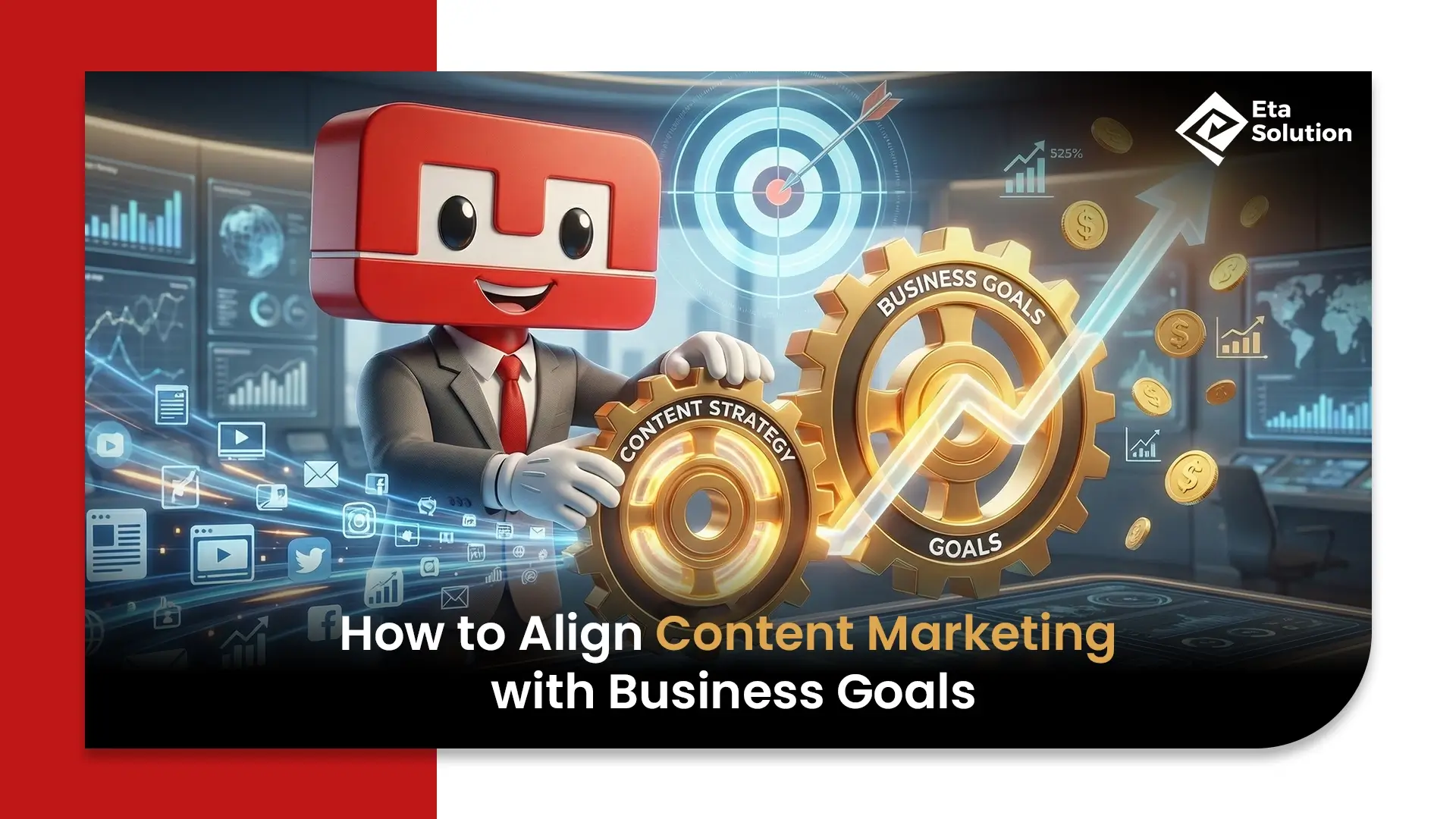
How to Align Content Marketing with Business Goals